
20 Ways Travelers Carried and Protected Money Before ATMs
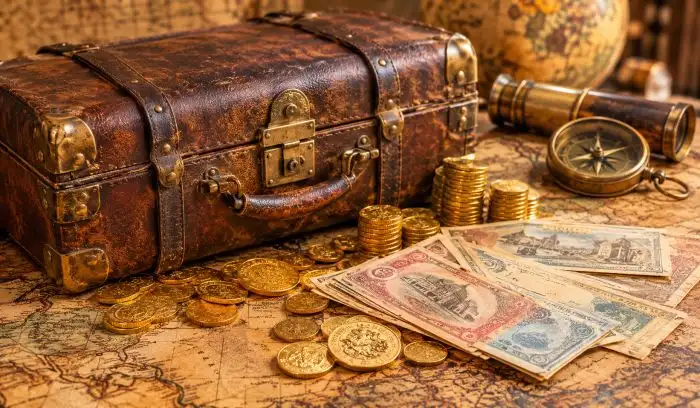






The early days of traveling and how travelers carried their money without using ATMs is interesting. People can now take cash out from just about anywhere or use cards or make digital payments while they're on the road. Things were very different before the ATMs were around. People needed to be resourceful in transporting and safeguarding their wealth on the road.
Some of them covered gold coins beneath the floor and placed others in big trunks, some hid banknotes in their clothes and some had banknotes concealed in secret money belts. Other means of obtaining money abroad were traveler's checks and bank transfers. Here are some of the old methods which illustrate how people saved their money and were prepared for the journey.
Grand Tour Aristocrats Hauled Gold Coins in Iron-Bound Trunks
The luxury European tourists of 18th-century 'Grand Tour' a month’s long sojourn around Europe didn’t travel with paper; they traveled with gold. They kept coins like the British gold sovereign or French louis d'or in trunks with iron staples, as foreign bank notes would not always enjoy welcome in another country.
They required their own escort wagons and armed outriders riding alongside to defend against highwaymen. If you wanted to have money moving around Europe, then you had to move weight under escort.
Read More: Best UK Safari Experiences for Families
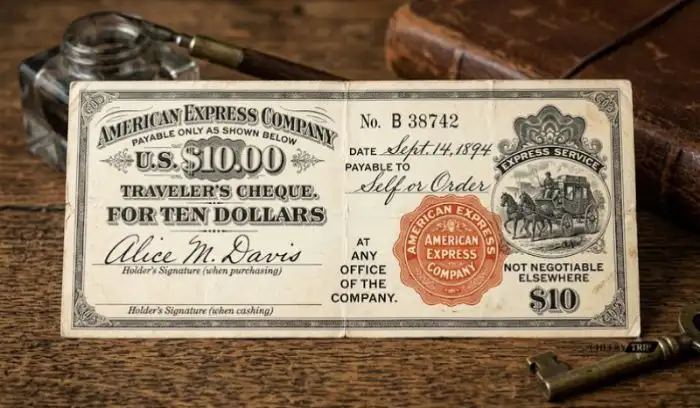
American Express Built a Check That Needed Two Signatures to Spend
At American Express, Marcellus Flemming Berry invented the traveler's check in 1891 after he witnessed a company president stumble to redeem letters of credit in tiny European towns. When he bought the check, the buyer signed his name. When he used it in payment at a merchant, he signed it again.
The clerk compares both signatures, refusing to accept the check if they are not identical. Travel credit had been around for over a hundred years, but Berry provided travelers with the trustworthiness of merchants' acceptance.
Victorian Travelers Stitched Banknotes into Coats and Petticoats
Victorians and early-20th century tourists also weren't big fans of pickpockets and so kept their paper banknotes in hand-sewn pockets in their garments (in the lining of their coat, or in their petticoats and corsets).
If you wanted to get at the money, you'd have to get somewhere private and cut the seam rather than unpick the stitches in front of people. Travelers would also leave larger sums behind, only taking out the cash they might spend that day.
Britain's Postwar Law Capped Vacation Spending At £50 a Year
In 1947, following the end of the war, the British government introduced the Exchange Control Act, which limited how much money people could take abroad from Britain.
During Harold Wilson's term as prime minister, between 1966 and 1970, the government set the upper limit at £50 a year. The authorities hot-stamped this into the passport, and security forces could even open bags to ensure no traveller was carrying more than this.
Hollow Boot Heels Hid a Traveler's Emergency Cash
Thievery was abundant when it came to 19th-century luggage so many hands, so many porters and coachmen, so many sailors. Wealthier travelers purchased trunks that contained false bottoms or hired cobblers to fashion boots with hollowed out heels, hiding rolled bills of high-value currency or gold coins inside for a final line of defense. It was effective, but hardly foolproof if someone stole the trunk or boots en route, they also took any cash within.
You May Also Read: Travel Tips for Planning a Vacation Without Stress or Hassle
A Wired Transfer Still Took Up to a Week to Clear
From the late 1860s, transatlantic telegraph cables linked Europe to the United States, enabling a stranded traveler who had run out of money to send home an encrypted message requesting funds. His relatives sent money to their bank and authorized a funds transfer to the overseas bank.
But although the overseas bank could produce the authorization letter, it still took three to seven days to decrypt it, authenticate the signatures, and push the funds through the banking system - leaving the traveler stuck at the hotel.
Garter Purses Strapped Hidden Savings to Travelers' Thighs
Before the invention of lightweight synthetics, travel catalogs recommended that tourists of the 1880s and 1890s buy a thick leather or canvas money belt with a tough metal buckle and buttoned pockets.
Women strapped garter purses to their thighs and hid them beneath long skirts, while men wore a belt around their waists under their trousers and undershirts. But in the heat and dust of tropical places, the leather belts chafed, and even a trip to buy a train ticket meant a walk to a corner or a bathroom.
Customs Agents Logged Every Coin Crossing the Border
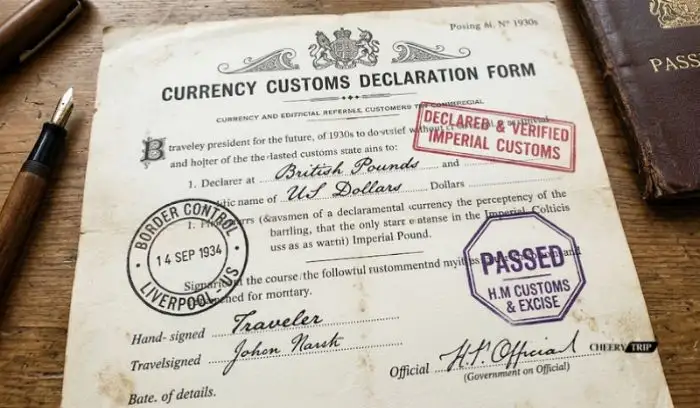
As early as the 1930s, and under the pressure of the Second World War, the States implemented very restrictive controls of currency to prohibit the flight of capital but also to protect their stock of gold.
Travelling in Europe by train, car, or ferry necessarily required a customs declaration listing all banknotes, coins, and travellers' checks held. Customs officials stamped this declaration when travellers entered and exited, and any discrepancy could lead to questions and, sometimes, to a penalty or the actual prise de corps.
FAQs
1. How did travelers carry money before ATMs existed?
Travelers carried gold coins, paper banknotes, traveler's checks, and cash hidden in clothing, boots, money belts, and luggage.
2. How did people protect their money while travelling in the past?
They used hidden pockets, hollow boot heels, locked trunks, secret compartments, and leather money belts to protect their savings from thieves.
3. What were traveler's checks and how did they work?
Traveler's checks were prepaid financial documents. The buyer signed them when purchasing and signed again when using them. Merchants compared both signatures before accepting payment.
4. How did travelers get money in foreign countries before ATMs?
They used traveler's checks, letters of credit, bank transfers, and gold or silver coins that were accepted in different countries.
5. Why was carrying money difficult before ATMs?
Travelers had limited access to banks, faced currency exchange problems, and worried about theft. Getting emergency money from home could also take several days.




.webp)